
Local Southampton
care team
Personalised
support
CQC rated
Good
Compassionate,
professional staff
Palliative Care at
Home in Southampton
Compassionate support when comfort, dignity and time together matter most
When you or someone you love is living with a life-limiting illness, remaining in familiar surroundings can provide comfort and reassurance during an important and often difficult time.
We Care Together provides personalised palliative and end-of-life care at home in Southampton.
Our care team provides practical, personal and emotional support centred around the individual, respecting their wishes, routines, dignity and choices while helping families spend more meaningful time together.
Support can be arranged around the person’s individual circumstances and, where appropriate, provided alongside the healthcare professionals already involved in their care.

Care centred around the person,
in familiar surroundings
Palliative care is not only about managing the practical effects of an illness. It is also about supporting the person to feel respected, comfortable and cared for while maintaining as much choice and quality of life as possible.
For many people, staying at home means remaining close to familiar surroundings, possessions, routines and the people who matter most to them.
Everyone’s wishes and circumstances are different, so we take time to understand the individual before care begins.
We learn about their routines, preferences, relationships and the things that are important to them, then build a personalised care plan around the day-to-day support they need.
Where appropriate, our carers can provide practical and personal care alongside GPs, community nurses, specialist palliative care teams and other healthcare professionals involved in the person’s support.

How our palliative care team can help
Every care package is based on the individual’s needs and agreed care plan. Support may include:

Personal care
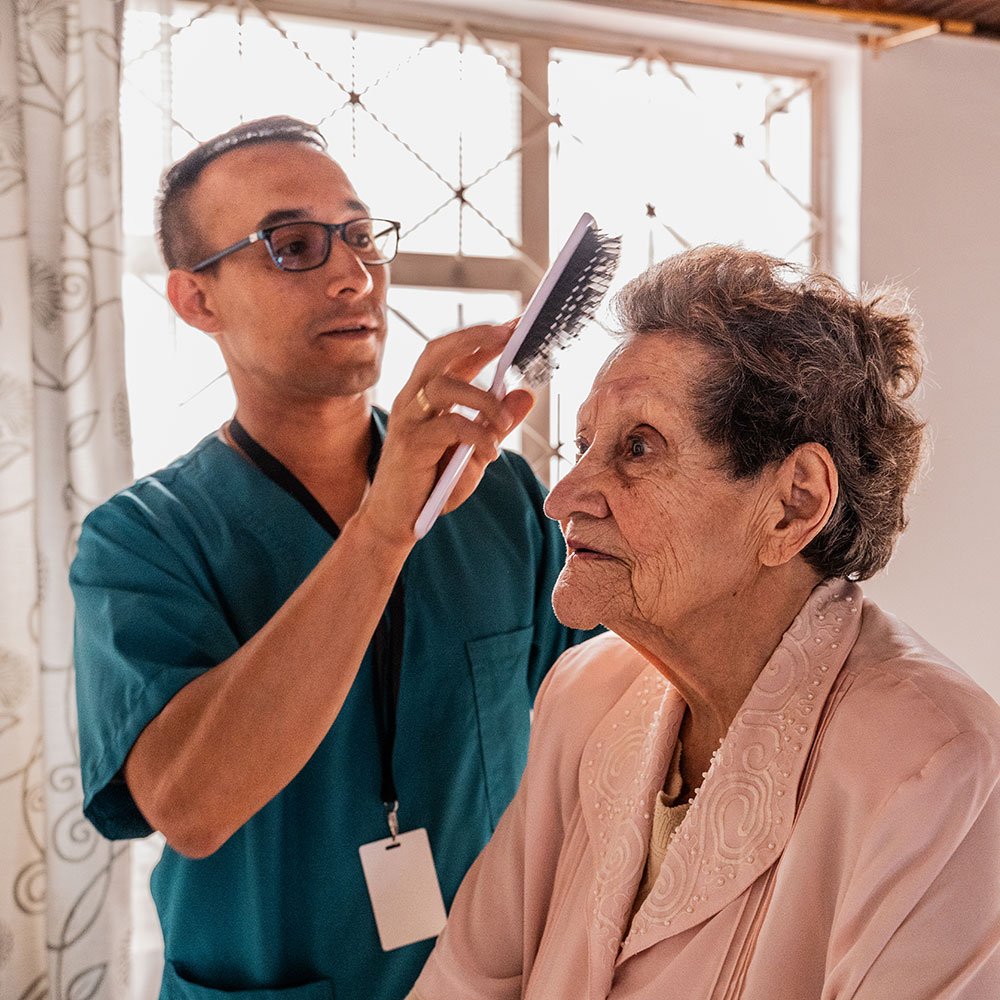
Sensitive assistance with washing, bathing, dressing, grooming and toileting, provided with privacy, dignity and respect.

Comfort and reassurance
A calm, compassionate presence throughout the day, offering company, conversation and reassurance when it is needed.

Medication support
Medication administration or reminders where appropriate and included within the agreed care plan.

Meals and hydration
Help preparing drinks, light meals and food according to the person’s preferences and agreed care requirements.

Mobility support
Appropriate assistance with mobility or changing position where this forms part of the person’s assessed care needs.

Companionship
Time to listen, talk or simply sit together, providing a familiar and reassuring presence.

Household support
Help with light household tasks, laundry, washing dishes and keeping the person’s immediate surroundings comfortable.

Morning and evening routines
Gentle assistance with established routines, helping the person continue familiar patterns of everyday life.

Family respite
Providing care while relatives rest, attend appointments, spend time with other family members or take a break from caring responsibilities.

Support alongside other professionals
Providing agreed personal and practical care alongside the wider healthcare and support team involved in the person’s care.
Palliative care and
end-of-life care
Palliative care and end-of-life care are closely related, but they are not exactly the same.
Palliative care supports people living with a life-limiting illness and can begin well before the final stages of life. Its focus is on the individual’s comfort, quality of life and overall support needs.
End-of-life care refers more specifically to the care and support provided as someone approaches the final stage of their life.
At every stage, the person’s wishes, dignity and individual circumstances should remain central to their care.
We Care Together provides personal and practical home care. We do not replace medical or specialist nursing care, but where appropriate we can provide support alongside GPs, community nurses, hospices and other healthcare professionals already involved.

Supporting the whole family
Serious illness affects more than the person receiving care.
Family members often want to provide as much support as possible, but caring responsibilities can become physically and emotionally demanding alongside work, appointments, family commitments and everyday life.
As care needs increase, time together can easily become dominated by practical responsibilities such as personal care, meals, medication and household tasks.
Our carers can help with some of those everyday responsibilities, giving family members more opportunity to focus on simply spending time with the person they love.
That support may involve preparing a meal, helping with personal care, sitting with your loved one while you rest or simply providing company and reassurance.
By sharing some of the practical caring responsibilities, we can help create more space for the moments that matter to you and your family.

Why choose We Care Together?

Local palliative care in Southampton
We Care Together provides personalised home care to individuals and families in Southampton.

Care centred around the individual
Each care package is shaped around the person’s wishes, routines, preferences and individual support needs.

Compassionate, professional carers
Our carers are selected and trained to provide sensitive, respectful and person-centred support.

Dignity at every stage
Privacy, comfort, personal choices and respect remain central to the way care is provided.
Familiar relationships
We understand the value of trusted relationships and aim to provide familiar carers who can get to know the person and their routines.

Flexible support
Needs can change, sometimes quickly. Care arrangements can be reviewed and adjusted where appropriate as circumstances develop.

Support for families
Our carers can provide practical assistance and reassurance to help reduce some of the pressure experienced by relatives and family carers.
Not sure where to begin?
You may have recently been told that someone you love needs palliative care.
Perhaps they are preparing to return home from hospital, their current needs are changing or your family is finding it increasingly difficult to manage without additional support.
You do not need to understand every care option before contacting us.
Our Southampton care team can listen to your circumstances, explain the practical and personal support we provide and talk you through the next steps.
If medical or specialist nursing support is required, this would continue to be provided by the appropriate healthcare professionals.
Palliative care FAQs
Palliative care supports people living with a life-limiting illness.
It focuses on the person’s comfort, quality of life and individual support needs while also recognising the needs of their family and the people close to them.
No.
Palliative care can begin earlier in a person’s illness and may continue for an extended period.
End-of-life care refers more specifically to support provided as someone approaches the final stage of their life.
Yes. Depending on the person’s individual circumstances and care needs, palliative and end-of-life support can be provided at home.
Different professionals may be involved, including GPs, community nurses, specialist palliative care teams and home care workers.
Our carers can provide personal care, companionship, meal preparation, medication support where appropriate, household assistance, mobility support and other day-to-day help included within the agreed care plan.
We provide personal and practical home care rather than medical or specialist nursing care.
Yes. Where included within the agreed care plan, we can provide sensitive assistance with washing, bathing, dressing, grooming and toileting.
Yes.
Our carers can provide support while relatives rest, attend appointments or take time away from caring responsibilities.
Where appropriate, our carers can provide agreed personal and practical support alongside the healthcare professionals already involved in the person’s care.
Yes.
Palliative and end-of-life care needs can change over time, so the care provided can be reviewed and adjusted where appropriate.
Where appropriate, we can provide personal and practical support following a return home from hospital.
Contact us as early as possible to discuss the person’s needs and current care availability.
We Care Together provides palliative care at home in Southampton.
Contact our team with the postcode where care is required to discuss availability.
Contact We Care Together by telephone or through the enquiry form.
A member of the team can listen to your circumstances, explain the support available and talk you through the next steps.

let’s talk
If you are considering palliative or end-of-life care in Southampton for yourself or someone close to you, speak to the We Care Together team.
We can discuss the practical and personal support required, answer your questions and explain how care at home could work alongside the other professionals involved.

We are a leading elderly care agency in Southampton and believe in the power of strong relationships and personalised care. We understand that families can’t always be there, and that’s where we step in – providing a compassionate ear and a helping hand whenever needed.
quick links
Contact Info
- We Care Together First Floor Office of Walker Cousins House Portsmouth Road Lowford Hampshire SO31 8ES, UK
- Tel: 02381 780708
- Email: info@wecaretogethersouthampton.co.uk
© 2026 Younic. All Rights Reserved.